thebestmale

Author name: Shiva Raj

GROOMING
Photos

Grooming

Grooming, being a purposeful act, has its origins rooted in the very mores of the societies in which we find ourselves. What holds as true as a standard for grooming in one society may vary slightly or considerably in another. Although a “cultural thing” primary care in grooming has its origins in the household where we were once groomed by our parents or caretakers. How we groom can be easily answered and understood but only after we address the latter- Why we groom? Grooming is a form of presentation. In grooming a particular way we set out to make an impression of some kind. In knowing what is required of us, let’s say in the workplace, we are mindful of certain social etiquette and, in wanting to be a member of the culture and community; we take the necessary steps to show that by modeling, more or less, the grooming techniques of our peers. Simple. Now for the former- How do we groom? We start, at least we should, by looking at ourselves and assessing that which is required in putting forth a good impression of ourselves. Toiletries. What toiletries one uses should be properly matched for one’s skin sensitivity ad well as liking. Having a sense of proper balance and application is important. And this is where those who came before you and know how comes in. Much like being shown how to shave or knot a tie, having that kind of rapport can prove essential. Hair Salons/Barbers. Knowing what’s fitting for you -And- the environment in which you will, let’s work, is important. To be a part of a team you must be willing to play by the rules. Sacrifices oftentimes, if you look closely, leads to gains. When grooming always leave some “room to expand.” Avoid being over the top but seek that middle ground known as moderation. Much like driving: knowing the “speed limit” and the nuances when navigating that marvelous road of grooming will help you to avoid unnecessary pitfalls, and at the same time give you a sense of connectedness with your peers and those who seek to model you. Thank you. Dr. MEIME.

FASHION
Grooming, Lifestyle

Fashion

To be without fashion is to be without culture. No one is fashion-less. From the first weaving of of Egyptian Cotton to the fabrication of drawers culture has played a major role in how we project ourselves through dress. Where there was once strict boundaries for who wore what and how. The age of “Do You” has done away with such outdated thinking. Fashion has more clout than free speech. Although there still remains (and rightly so) “dress codes” for particular institutions, outside of such boundaries, we need no one to dictate how we choose to dress. Fashion, as it pertains to dress, is to the body what skin (even if artificial and temporary) is to the flesh. What you choose to express, by way of your dress, may come from influences such as how you were raised, community, religion, or environmental influences. All in all the beauty of fashion is that it expresses not only that which was internal and finally sprung forth but a myriad of cultural inflections whose history brings with it a background that refuses to go unnoticed, and rightly so. Aka Dr. MEIME.

Health
Health/Fitness, Lifestyle

Health & Fitness

This is the first of a series of articles that will pertain to, amongst other relative issues, Health & Fitness. I’d like to begin by saying that, if words were not just utterances or fancy combinations of various pitched sounds artfully choreographed for the representation of communicative exchange for humankind, then, let me say that Health and Fitness, due to their “synonymous” relationship, would form the perfect marriage. Although no one sets out to deliberately find ways to be unhealthy or unfit. Many have and will, however inadvertently, take such a path. Even if such steps seem deliberate it is merely a false illusion. To embrace the wondrous journey of Health and Fitness requires a fairly well-balanced mental disposition. Now before I hand over to you my take, from personal experience and much research, I’d like to paraphrase something I’ve heard, and maybe you have as well, many times before. “Look at them, they’re in great shape and, they don’t work out or watch what they eat.” No matter how much that statement may appear as true (whatever level of truth it may encompass) IT’S FLAWED, and here’s why. We’ve all inherited our physical state from the genes of our predecessors -parents, grandparents, etc., etc. I’m going to exclude environmental/fast food influences for now. Whether “exo’ endo’, or mesomorph”, you were dealt one of the three along with behavioral traits. So, the next time you see someone who ” appears to be doing nothing to obtain a great figure”, remember this: They inherited that which has been passed onto them. The road to Health and Fitness is preceded by a mental state of determination and goal-directed thinking. Good health, cognitively speaking, is preceded by clear, rational, and non-self-centered thinking. What comes from positive thinking is the neurophysiological “building blocks” for the making and maintenance of one’s health. Blood. Nothing holds up the “report card” of health better than blood. Your blood screams out what’s going on with every part of you. Too much sugar- it will show up. Too much salt- ditto. The conditions of your organs, to a degree, a blood test will tell. So, regarding your health get diagnostically checked out by having a simple blood test for starters. By doing so you will not be in the dark but have well illuminated and factual information to work with to get you on your personal road to Fitness. Now let’s take a close up of fitness. Have you ever gone to a gym and worked out? There’s no place that’s more exhibitionistic, voyeuristic, and fetishistic than the gym. Kinesiology 101: Understanding Muscles. By just having a basic understanding of muscles (how and why they work the way they do) gives you an edge over those who blindly pull cables and unthinkingly curl dumbbells. Plan the day before what and why and how why you will do what you’ve outlined. Visualization. Visualization is a very powerful mental medicine. To achieve you must first believe. Set realistic goals and, upon achieving them congratulate yourself by creating a quote that reflects what you did to achieve it. Compete hard but only against self. Human beings are divided in every sense of the word. Compete hard by striving to unify the disharmony in yourself. And last, Love more and avoid searching for reasons to hate. Thank you. Aka Dr. MEIME.

Podcast 1
Lifestyle

Nine Attributes of a Real Man

As a man who has been fatherless almost all my life, I have found that defining masculinity is deceptively difficult. I didn’t have someone around to demonstrate true and healthy manhood. My father’s absence has been a source of grief and regret, but this sense of longing has driven me to God for answers, fulfillment, and sonship. He is my one faithful Father, my heavenly one. Finding a clear and precise definition of masculinity is especially difficult if we turn to the world, rather than to the Bible. Just consider for a moment what we learn about masculinity from our society. It generally doesn’t take long for a boy to encounter an erotic image, explicit story, or grossly inappropriate joke. Even if his parents successfully shield him from inappropriate content on television and online, his friends might pass along what they’ve seen and heard. A boy’s understanding of sexuality is often distorted from an early age, and that distorted view of sex deeply impacts a boy’s view of manhood. “Ultimately and completely, masculinity is defined by the God who makes men.” Meanwhile, the entertainment industry offers us one flawed depiction of manhood after another, glorifying the womanizing activities of James Bond, the stoic toughness and emotional distance of Jason Bourne, and the obsession for greed, power, and control of Gordon Gekko. As we get older, we are sold a bill of goods by drug companies who suggest that if we have male performance dysfunctions, we have “lost” our masculinity and need a cure to gain it back.How do we understand what masculinity is when it appears so convoluted everywhere we look?God Makes Men We need a better definition of masculinity, and who better to define what masculinity is than the Creator himself? When God created life, he reached down to touch and mold man from the earth. With care and intimacy, he created man in a distinct way. Ultimately, we learn that God is embedding his own image into man.The Lord God formed the man of dust from the ground and breathed into his nostrils the breath of life, and the man became a living creature. (Genesis 2:7)In the surrounding verses of Genesis 2, we watch as God defines the purpose of this sole man prior to the creation of woman: the purpose of his work, expanse of his authority, parameters of his obedience, and even the swelling of desire for a wife.Masculinity finds its definition in God alone — not the world, not culture, not the workplace. Ultimately and completely, masculinity is defined by the God who makes men.The God-Man But the plot thickens.In reading the grand story of God in the Bible, and searching for ideal representations of men among the kings, priests, prophets, warriors, and leaders we meet, we sense that something is never quite right. Sin has damaged the reflection of ideal masculinity. One biblical hero after another is shown to be wounded, broken, flawed, prone to disobedience and even to outright wickedness. And yet within the same men we see small glimpses of masculine glory: undeterred faith, unwavering conviction, humble service and sacrifice. But again only glimpses.“Jesus, is the perfect divine depiction of manhood. He defines true masculinity.” Until God himself breaks into time and space again to give us the model man. His Son, Jesus, is the perfect divine depiction of manhood. He defines true masculinity.In looking at the life of Jesus, we find countless attributes and commitments that show us how to live as a man faithful to the Father’s call. If you are a man looking for true masculinity, consider whether these nine commitments (among many others) would make a significant impact on your masculinity if actively applied in your role as a leader, employee, husband, father, and son.1. A man commits to following a greater authority. [Jesus] said, “Follow me.” But [the man] said, “Lord, let me first go and bury my father.” And Jesus said to him, “Leave the dead to bury their own dead. But as for you, go and proclaim the kingdom of God.” Yet another said, “I will follow you, Lord, but let me first say farewell to those at my home.” Jesus said to him, “No one who puts his hand to the plow and looks back is fit for the kingdom of God.” (Luke 9:59–62)2. He commits to sacrifice all else in the shadow of discipleship. “If anyone comes to me and does not hate his own father and mother and wife and children and brothers and sisters, yes, and even his own life, he cannot be my disciple.” (Luke 14:26)3. He commits to determined, joyful obedience. After this many of his disciples turned back and no longer walked with him. So Jesus said to the twelve, “Do you want to go away as well?” Simon Peter answered him, “Lord, to whom shall we go? You have the words of eternal life, and we have believed, and have come to know, that you are the Holy One of God.” (John 6:66–69)4. He commits to spiritual discipline. Rising very early in the morning, while it was still dark, [Jesus] departed and went out to a desolate place, and there he prayed. (Mark 1:35)5. He commits to abide in the word of truth. Jesus said to the Jews who had believed him, “If you abide in my word, you are truly my disciples, and you will know the truth, and the truth will set you free.” (John 8:31–32)6. He commits to growth and production, especially spiritual fruit. “By this my Father is glorified, that you bear much fruit and so prove to be my disciples.” (John 15:8)7. He commits to carry out God’s mission. “Go therefore and make disciples of all nations, baptizing them in the name of the Father and of the Son and of the Holy Spirit, teaching them to observe all that I have commanded you. And behold, I am with you always, to the end of the age.” (Matthew 28:19–20)8. He commits


The Epidemic of Male Body Hatred
Community, Grooming, Health/Fitness, Lifestyle, Videos

The Epidemic of Male Body Hatred

“If I could look like that guy who played Thor, I would be happy.”It’s a common belief among men of our age. Put more honestly, “If I can’t appear confident, sexy, intimidating, competent, and super-human, I’m worthless.”We compare ourselves to others in the gym. We come away from movies wanting to exercise for eight hours. We would rather jump in front of a truck than take our shirts off at the pool. We feel pathetic and small. We look at ourselves in almost every mirror we pass. When alone, we flex — not because we like what we see, but because we don’t. We have spent hundreds of dollars on pre-workout, weight loss, and weight gain supplements. We research the best way to bulk, shred, diet, and binge.Maybe this doesn’t resonate with you. But if it does, you are not alone. We have been fed a lie. I know this lifestyle. It’s a locomotive — and too powerful to be stopped by a single blog. I hope to shed some light on what we’re actually trying to achieve with each rep, each yard, each stabbing “You’re pathetic” we put ourselves through.Aspects of Male Body Hatred Health is not the issue here. There is a huge gap between being healthy and meeting our culture’s ideal of “hot.” And in that space lies any and every resource for a man to hate his body.“A man who hates his body is really searching for love.” A man who hates his body is really searching for love — a fundamentally relational search for intimacy with self in the form of confidence, intimacy with the opposite sex in being sexy, intimacy with the same sex in intimidation or acceptance, intimacy with authority in competency, and ultimately intimacy with God, in appearing worthy. The lie is that performance offers intimacy at all — it is, in fact, its foil. Yet this is the path we choose.A man’s hatred of his body takes place in terms of five relationships because he is searching for intimacy in each of these relationships.1. To our selves, we want to be confident. We want to love ourselves — to look in the mirror and think, “I look amazing.” We look — “I’m fat there, small there, weird there” — and emotionally destroy ourselves. We want confidence. Confidence on the basis of body image relates to intimacy in a very special way. If we are ever rejected, we want the confidence to say, “They are wrong for rejecting me.” We search for self-confidence so that we can temper our experience of rejection if and when it happens.This drive for self-love is driven by self-hate. It is a dialectic of inordinate self-praise at our own progress, and then emotional self-mutilation for our failures. In self-love, we are able to dismiss rejection as misinformed. In self-hate, we are able to preempt rejection with introspection. And we hope to find intimacy at the end — at the six pack.2. To the opposite sex, we want to be sexy. We want women to love us. We want to walk by women, and have them think, “He’s so hot.” We want women to lust after us. We hear women, even Christian women, talk about wanting to marry Channing Tatum or Zac Efron. Whether it’s accurate or not, we buy that even Christian women want a man to have a certain kind of musculature — not “muscly” or “big,” but cut — with lots of angles on every part of the body. We want to be able to seduce, to be “swoonworthy,” to embody the full form that media sells as “sexy.” It’s an obsessive and driving ideal.So, I go out for a run. I get home, and run again. What sort of performance earns the adjective sexy? “Certainly another run. Another set. Am I sexy yet?” We don’t speak it — Christians don’t even talk about it — but it drives us.3. To our peers, we want to be intimidating. We are primally competitive. We want to be the biggest, the most intimidating compared with other men. It can be reduced to “sizing up” another guy, but can have results as broad as “I’m amazing” and “I’m worthless.” We want to know that I could steal this guy’s woman, beat him up, and I want him to know that too. And if I feel like another guy could do that to me, I go to the gym. I purge. I go online. I buy a supplement. And, for many of us, we would simply settle for being accepted as one of the group.4. To our fathers, we want to be competent. “A dad’s disapproving glance is a surefire way to help a man hate his body.” A dad’s disapproving glance is a surefire way to help a man hate his body. When I was 13, my father, in commanding wisdom, patted his traps and said, “Girls like this muscle to be big.” End of story. For the next ten years: supersets of shrugs twice a week at the end of my workouts. We look to older men and feel the need to measure up — to compensate in body what we know we lack in spirit and mind. We want to know, “I can replace you on this earth when you go. I can take the mantle. I’m strong, like you. Please tell me I’m strong, like you?”5. To God, we want to be superhuman. Every male portrayal of God or the godly in art history is jacked. The statue of David. The creation of Adam. Even Jesus has a six pack. A six pack. Vascular. A youthful head of hair. We think, “David must have written Psalm 102 about P90X, because this guy is shredded.” What place does 18% or 25% body fat play in God’s story? And what about the scrawny, the skeletal, the scraggy? Neither quite fit in God’s grand history — at least how art portrays it.And so, men are given the

Five Ways to Build Stronger Relationships
Lifestyle, Videos

Five Ways to Build Stronger Relationships

“That used to be nice.”That was the first response when I recently asked a group of men what comes to mind when they thinkabout friendship. Once they entered their upper twenties and thirties, many of them no longer hadclose friendships. We mostly laughed when joking about Jesus’s “miracle” of having twelve close friendsin his thirties.Many factors combine to make friendship difficult for men. Personally, time for friends seems unrealisticin light of work or family responsibilities. Culturally, we don’t have a shared understanding of whatfriendships among men should look like. We also find ourselves connecting more digitally than deeply.We’ve lost a vision for strong, warm, face-to-face and side-by-side male friendship.But God made us for more. He made us in his own image, the image of a triune God who exists incommunal love. Therefore, friendship is not a luxury; it’s a relational necessity. We glorify God byenjoying him and reflecting his relational love with one another. If you are a man who has struggled togo deeper with other men, here are five concrete steps to cultivate deeper friendships.1. Establish rhythms for your relationships. Without rhythms in our lives, the important priorities don’t get done. If we value communing with Godthrough his word and prayer, we form a habit. If we want to exercise consistently, we create a pattern.Here’s a proposal for cultivating friendship: Build it into your schedule. Establish a regular rhythm forcoffee together. Devote a meal each week — say, Monday breakfasts or Wednesday dinners — to sharewith others. Plan to meet up to take walks together. Reserve an extended weekend each year to getaway and enjoy God’s creation together.2. Drop each conversation one notch deeper. Conversations about sports and daily activities are worthwhile. But if that’s all we talk about, it’s likesnorkeling on the surface while missing the deeper wonders of the ocean.But how do we take our conversations deeper?First, ask thoughtful questions. When you’re driving to meet your friend, think about what you want tolearn about him. Think about the main aspects of his life right now — his relationship with the Lord, hisfamily, his work — and ask him about how things are going. When he shares about a challenge, ask howhis internal life (his heart, his disposition toward God) is doing in the midst of this. From there, staycurious and ask more questions.Second, talk about what you’re each reading. Ask how God’s word has convicted or encouraged himrecently. Ask what book he’s recently read that helped him know God or live more faithfully as adisciple. Consider reading through Scripture or a Scripture-saturated book together and meeting to talkabout it.3. Overcome our cultural aversion to expressing affection. “Love one another with brotherly affection” (Romans 12:10). We don’t usually put those last two wordsnext to one another — brotherly feels masculine; affection feels feminine. But there they are together,inviting us to cultivate genuine, non-weird, affectionate brotherhood.We see this affectionate bond with Jonathan and David: “The soul of Jonathan was knit to the soul ofDavid, and Jonathan loved him as his own soul” (1 Samuel 18:1). We see it with Paul and the Ephesianelders: “And there was much weeping on the part of all; they embraced Paul and kissed him” (Acts20:37).Expressing affection feels uncomfortable to men today because our culture has slowly shifted itsunderstanding of masculinity. Rather than combining strength and tenderness, we view manhood asmuscular and aggressive. Our culture has also sexualized love, interpreting affection between men assomething other than friendship. But we can build a better way.4. Oxygenate your friendships with affirmation. What happens without oxygen? We become sluggish and lethargic. This is what relationships feel likewithout affirmation. This may be why some of your relationships feel withered, thin, or tired.Affirmation is relational oxygen. One of the most powerful tools for cultivating true friendship is Romans12:10: “Outdo one another in showing honor.”Men find it hard to give and receive honor and affirmation. It feels uncomfortable at first to tellsomeone why you thank God for him or why you respect him. But only at first. I’ve seen many men work through their initial hesitations and start cultivating a culture of sincere encouragement around them.And I’ve seen the other men flourish because of it.5. Invite friends into what you’re already doing. Our schedules are full and we rush from one thing to the next. We don’t see how we can find time forfriends. But what if you don’t need to open up your schedule? What if you can include friends into theactivities you already do? Here are a few suggestions I’ve seen work:When you plan to watch a sports game or weekly show, find out who else would want to watch it andinvite them to join you.If you exercise a few times each week, do it with a friend.Invite friends or family members to join you for dinner or dessert. If you have young kids, let your guestsparticipate in the bedtime routine and then stay around afterward.If you have young kids, invite someone to join your family at the park.Put a few friends on speed dial and call them on your daily commute home.If you have a home project to complete, invite someone to help you and offer to help him with his.Hope and Help for Forging Friendship Jesus is our greatest model of male friendship. He initiated relationships and he invited men to be withhim (Mark 3:14). He continually asked thought-provoking questions. He loved his disciples withbrotherly affection (John 13:1). He calls us his friends (John 15:13–15). He also gives us the greatprivilege of reflecting and enjoying this kind of true friendship to other men.Maybe as you consider taking these steps, you look ahead with both hope and hesitancy. Maybe youthink back to when you experienced deeper community and think you won’t find that again. Or maybeyou still feel pain from failed attempts at connecting with others. You wonder if forging friendship isharder, even impossible, for you.Before you give up, remember two truths: First, Jesus isn’t just the model for true friendship; he ishimself our truest friend. He

The World Needs More One-Woman Men
Community, Featured, Lifestyle, Videos

The World Needs More One-Woman Men

The “one-woman man” may seem like an endangered species today. In our over-sexualized and sexually confused society, it’s increasingly rare to come across married men who are truly faithful to their bride — in body, heart, and mind. It may be even more rare to find unmarried men who are on the trajectory for that kind of fidelity to a future wife. Jaws will drop when a handsome, eligible bachelor declares he’s a virgin waiting for the wedding night.Of the fifteen basic qualifications for the office of elder in the local church (1 Timothy 3:1–7), being a one-woman man may be the one that runs most against the grain of our society. We’re relentlessly pushed in precisely the opposite direction. Television, movies, advertising, and just about everything else conditions the twenty-first-century male to approach women as a consumer of many, instead of as a protector and servant of one. The models teach our men to selfishly compromise and take, rather than to passionately cultivate and guard fidelity to one woman. But what’s rare in society is often easier to find, thank God, in biblically faithful churches. The true gospel is explosively powerful, even under such intense pressure from a world like ours. You can be pure. You can detox. You can walk a different path by the power of God’s Spirit, even if that other path was once yours. In the company of others who enjoy deeper pleasures than promiscuity, you can become the one-woman man our world needs.For All Christians Just because being a one-woman man is essential for church leaders does not mean it’s irrelevant for every Christian. The elder qualifications, says D.A. Carson, are remarkable for being unremarkable. What’s demanded of church officers is not academic decoration, world-class intellect, or talents above the common man. Rather, the elders are to be examples of normal, healthy, mature Christianity (1 Peter 5:3). The elder qualifications are the flashpoints of the Christian maturity to which every believer should aspire, and which every Christian, with God’s help, can attain.God never meant for us to relegate one-woman manhood to the leaders. It’s the glorious, serious, joy-filled calling of every follower of Christ. It’s a word for every Christian man (and every Christian woman to be a “one-man woman,” 1 Timothy 5:9). And it’s relevant for married and unmarried men alike.For Husbands and Bachelors Clearly, one-woman man applies to married men. In faithfulness to the marriage covenant, the married man is to be utterly committed in mind, heart, and body to his one wife. Being a one-woman man, then, has implications for where we go, how we interact with other women, what we do with our eyes, where we let our thoughts run, what we look at on our computers and smartphones, and how we watch movies and television.“Long before a man is married he’s either becoming a one-woman man or not.” It’s also relevant for married men in the positive sense, not just the negative. A married Christian must not be a zero-woman man, living as though he isn’t married, neglecting to care adequately for his wife and family. If you’re married, faithfulness to the covenant requires your interests being divided (1 Corinthians 7:35), but only with one woman.Do you have to be married to be a one-woman man? The challenge to be a one-woman man applies not only to married men, but the unmarried as well. Are you a flirt? Do you move flippantly from one dating relationship to another? Do you enjoy the thrill of connecting emotionally with new women without moving with intentionality toward clarity about marriage?Long before marriage, bachelors are setting (and displaying) their trajectory of fidelity. In every season of life and every relationship, however serious, they are preparing themselves to be a one-woman man, or not, by how they engage with and treat the women in their lives.Isn’t It “Husband of One Wife”? Perhaps at this point, you’re feeling the weight of this phrase “one-woman man” both for elder qualification and for Christian manhood in general. Don’t most of our translations read “husband of one wife” in 1 Timothy 3:2 and Titus 1:6? That seems like a simple box to check. It’s either true or it’s not — none of these questions about whether your eyes and mind might be wandering unfaithfully.This may be the most debated of the elder qualifications in 1 Timothy 3:1–7 and Titus 1:5–9. Some say it means that church leaders must be married; others say it means no divorcees; others claim it was designed to weed out polygamists. But one problem, among others, with each of those interpretations is that they make the qualification objective — plainly true or false — rather than subjective like every one of the other fourteen qualifications.The traits for leadership in the local church are brilliantly designed to queue up the plurality of elders to make a decision together about a man’s readiness for ministry. Soberminded, self-controlled, respectable, hospitable — these are subjective categories that require careful thought and evaluation. I believe Paul intended us to read “one-woman man” as needing the same spirit of discernment, not as a black-and-white, no-exceptions rule. Is this man today, through years of tested faithfulness, faithful to his wife with his mind, heart, and body? Is he above reproach in the way he relates with women? Is he manifestly a one-woman man?Ask Yourself Men, ask yourself this question, and be ruthlessly honest: “Am I a one-woman man?” What, if anything, in my life would call this into question? What habits, what relationships, what patterns do I need to bring into the light with trusted brothers, and ask God afresh to make me truly, deeply, gloriously, increasingly a one-woman man?If you’re married, what’s your reputation? Do people think of you — your thoughts, your speech, your actions — as joyfully and ruthlessly faithful to your wife? Or is there some question? Are you known for demonstrating self-control publically and privately for the sake of the purity and fidelity of your

Five Ways to Find Male Friendships
Community, Grooming, Lifestyle, Videos

Five Ways to Find Male Friendships

Guys Need Bros  Five Ways to Find Male Friendships  Article by Bryan Stoudt  Pastor, Philadelphia, Pennsylvania American men are facing a health epidemic. It’s not smoking or obesity. It’s not heart disease. No, the greatest health issue facing American men today is loneliness and isolation. Boston Globe reporter Billy Baker details the all-too-familiar process. As we enter our adult years, work takes up more and more of our time. Then we get married and have kids. After running our homes, trying to stay in shape, and (for Christians) getting involved with the church, we have little time left for friendships with other guys. When we do find a bit of “free time,” it’s hard to leave our wives home alone to change diapers, correct homework, and broker peace deals among the warring children. So, we let our male friendships slide. Baker found that over the past thirty-plus years, study after study has documented the unhappy consequences for our health. Lonely people are far more likely to die during a given period than their socially connected peers — even after accounting for age, gender, and other factors like healthy eating and exercise. In fact, socially isolated people have an increased risk of cardiovascular disease, stroke, and the progression of Alzheimer’s.  It gets worse. Another study determined that loneliness matched smoking as a long-term risk factor. In 2015, a massive study from BYU gathered data from 3.5 million people over 35 years, and found that those who are lonely, isolated, or merely living by themselves are 26% to 32% more likely to die prematurely. No matter how you look at it, loneliness is a train wreck for our health. My Story, Your Marriage I was forty and friendless. But this was a crisis at least fifteen years in the making.  For years, my wife had been telling me that I needed other guys in my life.  “Okay, but I already have plenty of friends. We’re always connecting on Facebook and emailing. I’m constantly seeing people at work. When I have something I need to share, I tell you. Besides, after work and our family, there’s nothing left!” After I blew her off, she gave up and started to pray. A few years after this uncomfortable conversation, a respected Christian author challenged us to form close male friendships in a men-only session at a marriage conference. At the time, I knew nothing about the risks isolation posed. Physically, I felt great. But then he drew a connection between our friendships with other men and our marriages.  Now he had my attention.  Letting our friendships with other men fade, he warned, turns our wives into unintentional idols where they become our only true confidante and friend. This is a role God never intended them to fill, and places a tremendous amount of stress on our marriages.  Furthermore, our wives are so involved in our lives that they can’t give us a truly outside perspective. For example, my wife has been giving me some helpful feedback on my parenting. She’s very wise, but when my friend listened, he added something neither one of us had considered. So, not only do man-to-man friendships afford more unfiltered honesty that, practiced with our wives, would hurt or frustrate them, but they also offer help with being a man in a way that wives cannot. God Made Men for Friendship Beyond the benefits for our health and marriages, God made men for friendship. That means we can’t simply opt out. Other men make up for our deficits with their strengths, as when Aaron spoke on Moses’s behalf (Exodus 7:1–2). Male friends also provide encouragement to glorify God in new ways. Or they can help us persevere in difficulty, like when Jonathan “went to David at Horesh, and strengthened his hand in God” (1 Samuel 23:16) when David was running from Saul. Other men can also provide us with a life-giving rebuke we desperately need (Proverbs 27:6). Even Jesus had Peter, James, and John, his own inner circle of male friends.  So, forming close male friendships is absolutely critical to the health of our bodies and marriages, and reflects God’s design for our lives. Key Elements in Male Friendship But these friendships won’t just happen. The following are important elements for developing male friendships. Find your identity in Christ. If we’re going to get close to other men, where they can see our sins and scars, we need to be deeply rooted in Christ — to truly know that “by grace [we] have been saved through faith . . . not a result of works” (Ephesians 2:8–9). When we trust that God accepts us apart from what we do, we’re free to let other men know who we really are. Initiation. God calls men to lead and go first (Genesis 2:18; Ephesians 5:23). Which requires some effort and — the real kicker — the risk of being rejected. It hurts when I reach out to another guy and he takes a week to respond. But remembering that Jesus left heaven to die for our sins gives us courage to take initiative in our own friendships (Hebrews 2:17). Sacrifice. To make room for friendships, we’ll need to say no to some good, but second-best, things. If we have younger kids, it may require some sacrifice from our wives, so it’s important to work this out as a team.  Five Ways to Find (and Deepen) Male Friendships Now that we’ve explored why we need true male friends and considered key elements of friendship, let’s take a look at what we can do about it. Call them “man dates” or (in true male fashion) nothing at all, but spend time with different men and see which relationships have promise. In particular, test the ability to be real and transparent with each other. Instead of looking for the perfect friend, look for a bunch of faithful, imperfect ones. For example, it’s good to have a friend who can encourage you, but also one

The Dealmaker Who Changed the Face of US Financial History
Entrepreneurship, Featured

The Dealmaker Who Changed the Face of US Financial History

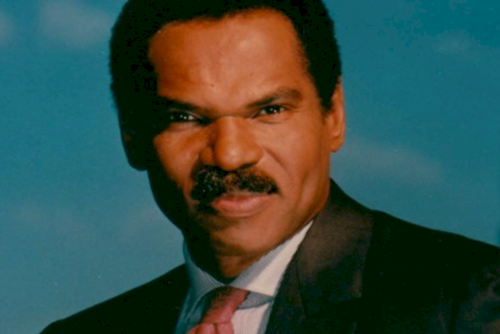
Last week marked the 30th anniversary of a historic deal closed by Reginald Francis Lewis for $985 Written By Lynette Holloway | Posted December 4, 2017million that changed the face of financial dealmaking in the United States. On November 30, 1987, Lewis closed the leveraged buyout of Beatrice International Foods, which at the time was the largest offshore transaction in US history. This groundbreaking transaction would establish Lewis as the first African American billionaire business tycoon, placing himself,  his investment banker, Michael Milken, and the company on the prestigious Fortune 500 list. “We want the new generation to be inspired by the work of RFL on that November 30, 1987.” Loida Lewis, his widow recently told Pittsburgh Courier. “He demonstrated his belief in and commitment to human rights, civil rights and economic development.” U.S. Rep. Elijah Cummings marked the anniversary of the historic deal by placing the financial transaction milestone in the U.S Congressional Record in honor of Lewis’ work. Lewis died in 1993, just one day after announcing that he had been diagnosed with brain cancer. Writer Blair S. Walker used the 50-year-olds unfinished memoir to craft Why Should White Guys Have All the Fun?, an inspiring look at the financier’s life and work that would become a national bestseller. His legacy contains many firsts. He became the first (and still the only) person accepted to Harvard Law School before actually applying to the prestigious school. Today, the Reginald F. Lewis International Law Center is the first Harvard Law School building to be named for an African American. Highlights of Lewis’ exceptional life are on display at the Smithsonian National African American Museum of History and Culture in Washington, D.C. and at the museum named for him in his native Baltimore. On Thursday, December 7th, the Reginald F. Lewis Museum of Maryland African American History and Culture will celebrate 75th anniversary of his birth with a special event, “Reginald F. Lewis, The Conversation: The $Billion Deal, The Lifestyle, The Man.”  Speakers include Keith Perrin, the co-founder of the iconic FUBU streetwear brand Click here to read original article in NewsOne.com.

20 Innovative Black Entrepreneurs
Entrepreneurship, Featured

20 Innovative Black Entrepreneurs

History is being made all the time, though, so in this article, we’re going to take a forward-looking approach and learn about 20 black entrepreneurs who are pursuing innovative business ventures right now. These innovators are based all around the world and across many different industries, from financial services to renewable energy. I’m focusing on up-and-coming entrepreneurs rather than household names, so there will probably be quite a few people in this list who are new to you. I hope you take their achievements as inspiration to start new ventures of your own. Imagine taking inspiration from the traditional “sou-sou” savings clubs that are common across Africa, matching it up with modern technology, and creating a successful financial technology startup that just attracted a £100million investment from Goldman Sachs. That’s Martin Ijaha’s story, and I have a feeling it’s only just beginning. His UK startup, Neyber, partners with employers to offer loans to employees at affordable rates, with the repayments being taken directly out of their paychecks. From issuing its first loan in 2014, it’s now lent out more than £50 million, and the new influx of funding should help the company grow fast. Those of you in the U.S. may remember Moziah Bridges from his brief appearance as a precocious 12-year-old bow-tie maker on the reality TV show Shark Tank a few years ago. Reality TV doesn’t always translate into real-world success, but it has for Bridges. Now 15 years old, he recently signed a seven-figure deal to supply bow ties to the NBA, and his business, Mo’s Bows, is going from strength to strength. On Shark Tank, he turned down a $50,000 investment offer from one investor in favor of zero money but an ongoing mentorship with fashion mogul Daymond John. That’s looking like a smart move now. Advertisement The road to success isn’t always straight and direct. Kymberlee Jay started out as a dancer for Madonna before working as a choreographer, but she’s now found success with DoodleDirect, a company that makes slick animated videos to boost companies’ internal and external communications. DoodleDirect has done work for major clients like Knight Frank, Vauxhall and the Food Standards Agency, and its success was acknowledged a few months ago when Jay won the Arts and Media Rising Star award at the 2017 Black British Business Awards. The daughter of Angolan refugees, Myriam Taylor cofounded both a biotech company and a luxury haircare company in Lisbon, Portugal with her husband Paulo. When she was pregnant, Taylor wanted to be able to wear her hair both curly and straight while avoiding any harsh chemicals. Not finding a solution she was happy with, she decided to create one herself, and now her company, Muxima, sells a growing range of caviar-based shampoos, conditioners, oils and other products for textured hair both in European department stores and online. Nigerian entrepreneur Iyin Aboyeji co-founded Andela, a software training company that snagged a $24 million investment from Mark Zuckerberg and Priscilla Chan’s foundation. But shortly after the investment, Aboyeji left the company to focus a new venture, Flutterwave, focusing on enabling digital payments across Africa. The company has already processed 10 million transactions and $1.2 billion in payments, so watch out for what it does next. Husband and wife team Courtney and Tye Caldwell just won a $100,000 investment from a Dallas startup contest for their ShearShare startup. The idea is simple: connect owners of barbershops and beauty salons who have empty chairs with individual stylists who need space to work. Tye is a salon owner with more than 20 years of experience, while Courtney has worked in sales and marketing for companies like Zendesk, Zenefits, and Qualtrics. With their solid business idea, complementary skills and a new infusion of cash, expect ShearShare to grow even faster in 2018. After a long career at the United Nations Development Programme (UNDP), Anne Githuku-Shongwe decided to start her own mobile gaming company, Afroes. Although it seems like a change of direction, development is still at the core of her work: the goal of Afroes is to create games that will “position African youth for productive futures by innovating in skills acquisition, engagement and connecting to opportunity.” With a long track record and recognition over the years from organizations like the Cartier Women’s Initiative and the Schwab Foundation for Social Entrepreneurship, there’s plenty of scope for more to come from this creative South African entrepreneur. Maya Penn was just eight years old when she started her sustainable fashion company, Maya’s Ideas. Now 17, Penn has written a book, given three TED talks, and been recognized by Oprah Winfrey as a “SuperSoul 100 Entrepreneur”. As her business selling environmentally friendly fashion accessories grows, she also invests in charitable initiatives such as created eco-friendly sanitary pads for women and girls in developing countries and shipping them to healthcare facilities in Haiti, Senegal, Somalia, and more. As an entrepreneur, you’re often told to “follow your passion.” But some people have multiple passions, and it’s often their combination that brings success. That’s been the case for former NBA basketball player Lanny Smith, who now runs Active Faith Sports, a sports retailer infused with his Christian faith. Many of the products have slogans reflecting his religious beliefs, and this combination of sport and religion has clearly found an audience—the company had revenue of almost $7 million in 2016. It takes a lot of courage to go up against the big tech giants like Apple and Verizon, but that’s exactly what Florida entrepreneur Freddie Figgers has done with his cellphone company, Figgers Communication. The company makes and sells its own proprietary handsets as well as offering its own cellphone network. The phone also has a special feature to prevent texting while driving. Figgers got started with technology at a young age and already has a series of inventions to his name. Photo from FreddieFiggers.com Mignon Francois’s story is the stuff of dreams. She started out deep in debt and selling cupcakes from her living

Scroll to Top